
Your PG&E Bill Keeps Climbing: The Home Upgrades That Actually Beat the Peak in Fresno
By Smart Home Improvements ·
If you live in Fresno or Clovis, you have probably had the same moment: you open the PG&E app, look at the amount, and check twice to make sure it is really your bill. Rates have gone up again, the house was hot all afternoon anyway, and it feels like there is nothing you can do short of financing a solar system.
There is something you can do, and it is usually cheaper and lower-risk than solar. We install roofing, windows, and insulation across the Valley (CA License #1129883, working here since 2014), which means we can look at your whole home envelope and tell you, honestly, where the first dollar belongs. This post walks through that in plain language, with one clearly labeled example so you can do the math on your own bill.
Why your PG&E bill keeps climbing, and when it hurts most
Two things are happening at once.
First, PG&E residential rates have risen repeatedly through 2025 and 2026, and more increases have been proposed for later years. We are not going to quote you a precise cents-per-kilowatt-hour number as gospel, because it changes and it depends on your plan. Pull up your own bill for the real figure.
Second, and this is the part most homeowners miss, most homes are now on a time-of-use plan. On PG&E’s most common plan, power costs the most during the peak window, which runs late afternoon into the evening, commonly 4pm to 9pm. That is not a coincidence problem you can shrug off in Fresno. Those are exactly the hours a Valley home is hottest, when your attic has been baking all day and your air conditioner is running flat out to keep up. So you are running your biggest electrical load during the most expensive hours of the day. That is the engine behind the bill.
The good news hiding in that sentence: if you can make your AC work less during the 4pm to 9pm window, you are cutting the most expensive kilowatt-hours you buy. That is where the home envelope comes in.
The cheapest kilowatt-hour is the one you never use
Here is the framing a solar company has no reason to give you: before you finance a system that generates power, it is almost always smarter to reduce the power you waste. The cheapest kilowatt-hour is the one you never use.
Solar has its place. But a solar loan is a 20-year commitment sized to your current, leaky, heat-soaked house. If you air seal and insulate first, your AC pulls less, your peak demand drops, and any solar you add later can be smaller and cheaper because it has less to cover. Doing it in the other order means you pay to generate power you are still leaking out through the attic.
We do not sell solar, so we do not have a dog in that fight. We just see a lot of Fresno homes that spent big on panels while a hot, under-insulated attic quietly kept the AC grinding through every peak window. Fix the envelope, then decide.
Walk the envelope in ROI order
For a hot Fresno home, the upgrades that beat the peak have a natural order. Spend from the top down and each dollar does more.
1. Air sealing and attic insulation (the biggest bang)
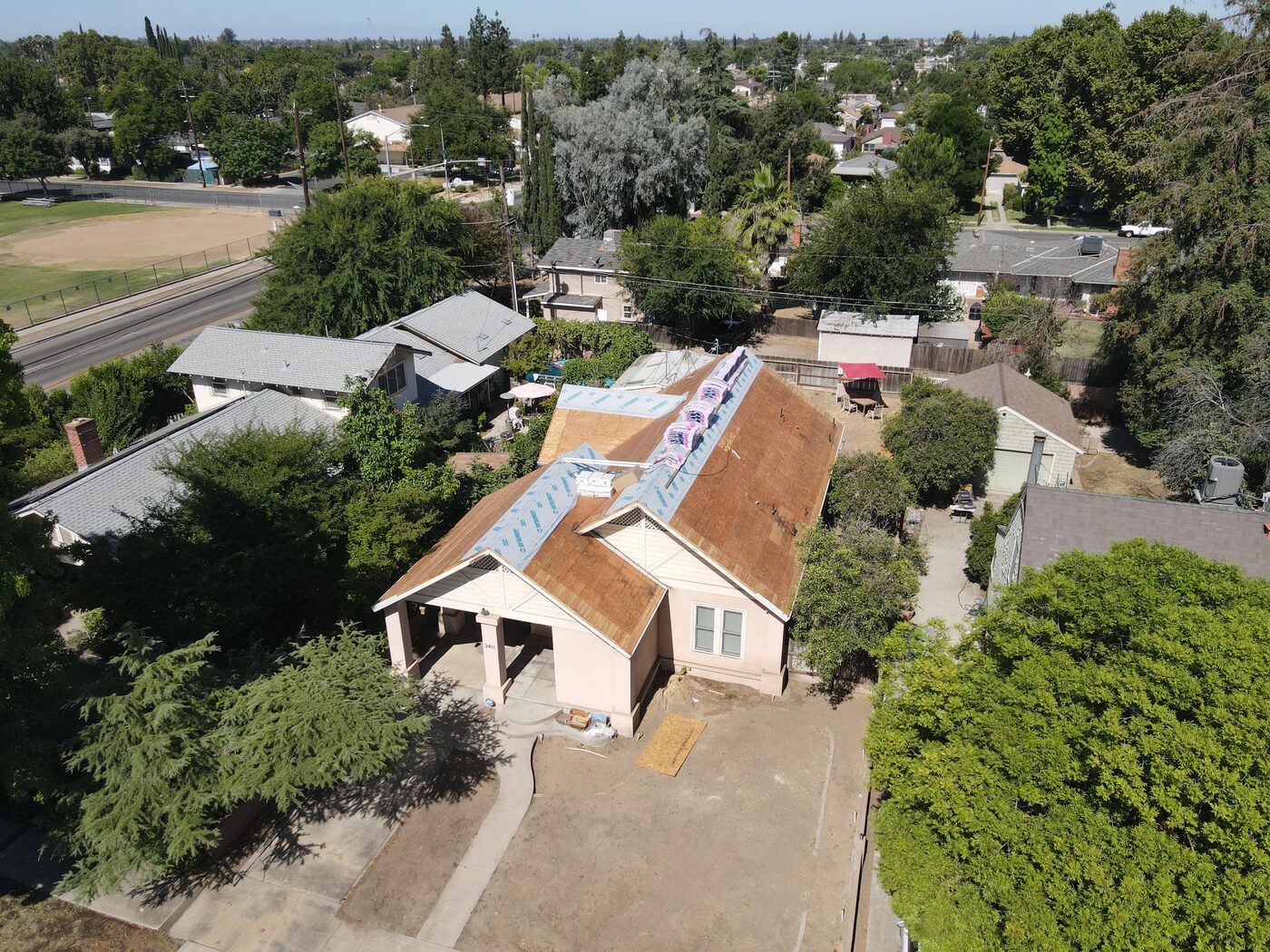
This is almost always the first dollar. Air sealing closes the gaps where conditioned air leaks out and attic heat sneaks in, and attic insulation slows the heat trying to push down into your living space. Together they take the hardest edge off the afternoon heat load, which is the load that lands right in the peak window.
ENERGY STAR estimates homeowners save about 15% on heating and cooling costs by air sealing and adding attic insulation. That is an honest, national estimate, not a guarantee about your specific house, and we will not inflate it. But it is a real, repeatable result, and it usually costs a fraction of a financed solar system. If you want the deeper explanation, we wrote a full piece on how proper insulation can reduce your energy costs, and you can read about our attic insulation and broader insulation services too.
2. Radiant barrier for the attic heat load
A radiant barrier is a reflective layer in the attic that pushes back the radiant heat pouring off a sun-baked roof deck. In our climate, attic temperatures can climb brutally high on a summer afternoon, and that heat radiates straight down onto your insulation and ceilings. A radiant barrier cuts that radiant load, which takes even more work off your AC during the peak.
It works best on top of good air sealing and insulation, not instead of them. If your attic is the right candidate, it is one of the better second dollars in a Valley home. We will tell you straight whether yours qualifies.
3. Energy-efficient windows (real comfort, usually after attic work)
Good energy-efficient windows genuinely help. They cut solar heat gain through the glass, kill drafts, and make a west-facing room that used to bake in the afternoon actually livable. The comfort difference is real and immediate.
But we will be honest with you: windows alone will not fix a hot house. If your attic is leaking and thin on insulation, new windows are a nice upgrade sitting on top of an unsolved problem. Per dollar, attic work almost always comes first, then windows once the envelope above you is handled. We break down the tradeoffs in the benefits of energy-efficient windows.
The upgrade order at a glance
| Upgrade | What it does | Typical order |
|---|---|---|
| Air sealing + attic insulation | Stops air leaks and slows heat gain, cuts the peak cooling load the most per dollar | 1st |
| Radiant barrier | Reflects radiant heat off a sun-baked roof deck, lowers attic heat load | 2nd |
| Energy-efficient windows | Cuts solar gain and drafts, big comfort gain, real load reduction | Usually 3rd |
This is the order for most homes, not every home. If your windows are failing or a room is unbearable, we may adjust. That is what the free assessment is for.
How time-of-use pricing works, in plain English
Time-of-use just means the price of electricity changes depending on the hour. Off-peak hours are cheaper. Peak hours, commonly 4pm to 9pm on PG&E’s most common plan, are the most expensive. Every kilowatt-hour your AC pulls in that window is billed at the top rate.
Now picture a typical Valley summer day. The attic has soaked up heat since morning. By late afternoon it is radiating that heat down into the house right as the peak window opens, so the AC runs hardest during the priciest hours. A tighter envelope changes that story in two ways. It reduces how much your AC has to run at all, and it flattens the afternoon spike so less of your cooling lands inside the expensive 4pm to 9pm window. You are not just using less power, you are using less of the most expensive power.
A worked example (use your own bill)
Let us make this concrete. This is an example to show the logic, not a promise about your home. Always use your own bill for the real numbers.
Example, for illustration only:
- Say your summer peak rate is around 40 cents per kWh. Check your own bill for your actual rate and plan, it will differ.
- Say your cooling adds roughly 600 kWh in a hot summer month.
- ENERGY STAR estimates air sealing plus attic insulation saves about 15% on heating and cooling. Fifteen percent of 600 kWh is about 90 kWh less in that month.
- At the example rate of 40 cents, 90 kWh works out to roughly $36 in that month.
Now layer in time-of-use. The kilowatt-hours you shave are concentrated in the hot afternoon, which is peak-priced, so the dollars you save skew toward your most expensive hours. That is why a tighter envelope hits the bill harder than a flat “15% off” makes it sound.
Run the same three lines with your own peak rate and your own summer usage and you will see your own payback. If your rate is higher than the example (many are) or your house is leakier than average, the number moves in your favor. If you want a fast starting point on project cost, our instant estimate tool gives you a range before anyone visits.
We are showing you the method, not selling you a savings figure. Any contractor who promises you an exact dollar amount before measuring your attic is guessing.
What about rebates and tax credits?
There are real programs that can offset the cost of envelope work. Federal, PG&E, and California all run incentives, including the 25C federal energy-efficiency tax credit, PG&E rebates, and TECH Clean California. We are deliberately not printing dollar amounts here, because eligibility and amounts change and we will not quote a number we cannot stand behind. We keep a plain-English rundown of the current programs and walk you through what your specific project may qualify for. Ask us during the assessment and we will point you to what applies.
We do not sell solar, so this is unbiased
This is the part that makes our advice different. Smart Home Improvements does roofing, windows, and insulation. We do not sell solar and we earn nothing on a solar system, so we have no reason to steer you toward or away from it. Our only interest is putting your first dollar where it does the most good for a hot Valley home, which is usually the envelope.
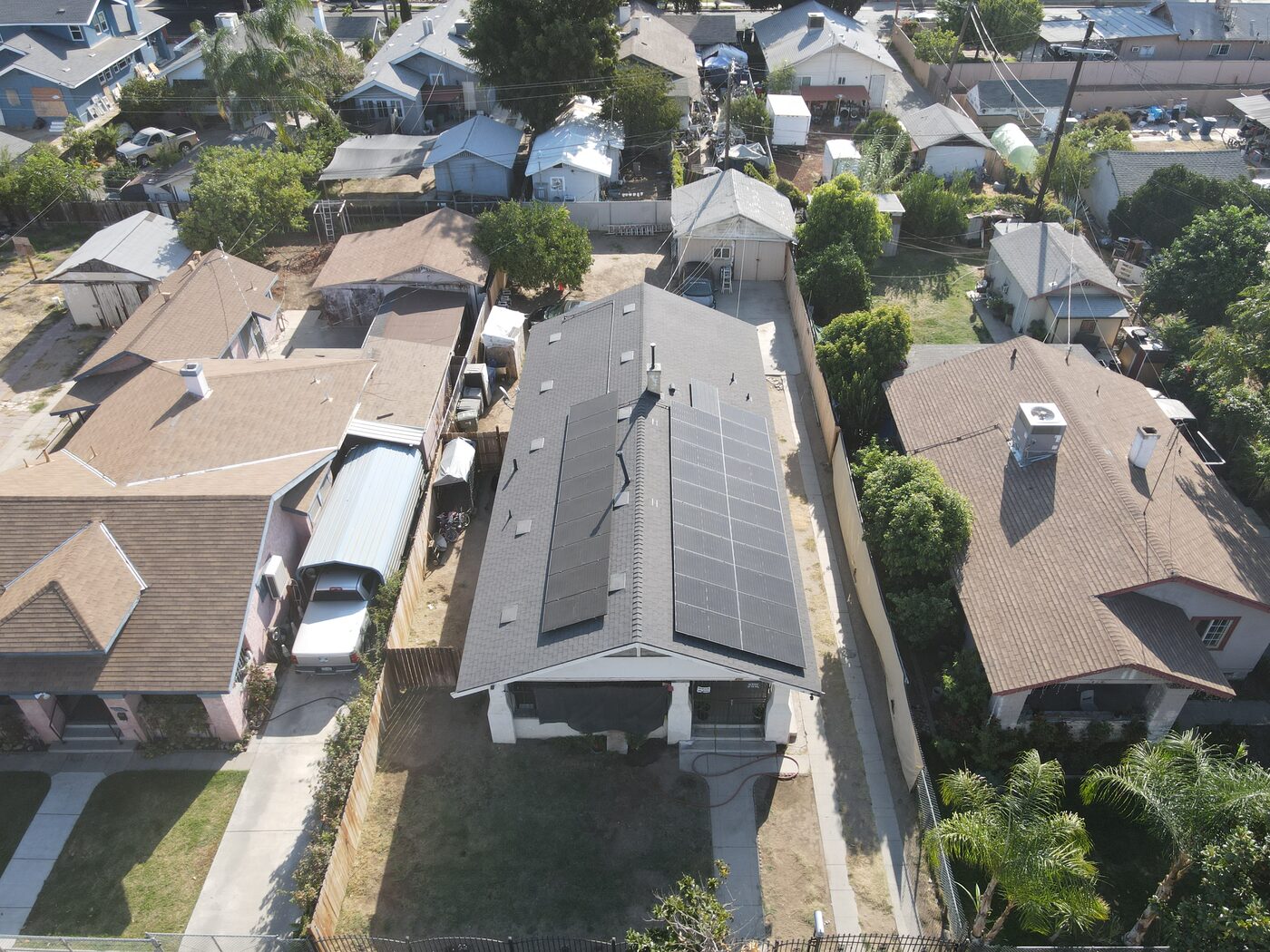
And if you already have panels, that is fine. We work cleanly around existing solar arrays, detaching and remounting them properly when we reroof a home, so solar never takes a new roof or attic upgrade off the table. Being the crew that does roof, windows, and insulation under one roof is exactly why we can price the whole envelope against the peak honestly, instead of selling you the one product our company happens to carry.
Book a free Home Comfort and Energy Assessment
Stop guessing at your bill. We will come out, get up in your attic, and measure what is actually happening: insulation depth and coverage, air leaks, ventilation, radiant heat load, and the condition of your windows and roof. Then you get a written, itemized plan in ROI order, with no obligation and no solar pitch.
Schedule your free Home Comfort and Energy Assessment by calling (559) 833-6945 or reaching out through our contact page. Have more questions first? Our full FAQ covers roofing, windows, and insulation in one place.
Smart Home Improvements, roofing, windows, and insulation for Fresno, Clovis, and the Central Valley. CA License #1129883, serving the Valley since 2014.
Frequently asked questions
Why is my PG&E bill so high in Fresno?
Two things stacked on top of each other. PG&E residential rates have risen repeatedly through 2025 and 2026, and most homes are now on a time-of-use plan where power costs the most from late afternoon into the evening. In the Valley that peak window lines up almost exactly with the hottest part of a summer day, so your AC is working hardest at the very hours electricity is priced highest. A leaky, under-insulated home makes the AC run even longer during that window, which is where the bill really climbs.
What are PG&E peak hours?
On PG&E's most common time-of-use plan, the peak (most expensive) hours run from 4pm to 9pm every day, with cheaper off-peak pricing the rest of the day. Plans vary, so check your own bill or your PG&E account for the exact plan name and hours. The point for Fresno homeowners is that 4pm to 9pm is also when a hot house is dumping the day's heat load back at your air conditioner.
Will insulation really lower my electric bill?
It lowers what your heating and cooling system has to do, which is the biggest controllable part of most Valley bills. ENERGY STAR estimates homeowners save about 15% on heating and cooling costs by air sealing and adding attic insulation. That is a national estimate, not a promise about your specific home, but air sealing plus attic insulation is consistently the best first dollar for a hot Fresno house. We measure your actual attic in a free assessment so the recommendation fits your home, not an average.
Should I get solar or fix my insulation first?
We do not sell solar, so we have no reason to push you either way. Here is the honest order: the cheapest kilowatt-hour is the one you never use. Air sealing, attic insulation, and a radiant barrier reduce how much energy your AC pulls in the first place, usually for a fraction of the cost of a financed solar system. If you later add solar, a tighter home means you need a smaller, cheaper system to cover what is left. Envelope first is the lower-risk order for most homes.
Do new windows lower my energy bill?
Good windows cut solar heat gain and drafts, and they make a room noticeably more comfortable, especially west-facing rooms that bake in the afternoon. But windows alone will not fix a hot house if the attic is leaking and under-insulated. Per dollar, attic work almost always comes before windows. Windows are a strong comfort-and-value upgrade once the envelope above you is handled. We explain the tradeoffs in our guide to energy-efficient windows.
What is a radiant barrier and do I need one in Fresno?
A radiant barrier is a reflective layer installed in the attic that pushes back the radiant heat coming off a sun-baked roof deck. In a climate like ours, where attic temperatures can soar on a summer afternoon, it directly reduces the heat load your insulation and AC have to fight. It works best paired with proper air sealing and attic insulation, not as a substitute for them. We will tell you honestly whether your attic is a good candidate.
Are there rebates or tax credits for insulation and windows?
Yes. There are federal, PG&E, and California programs that can offset the cost of envelope upgrades, including the 25C federal energy-efficiency tax credit, PG&E rebates, and TECH Clean California. Programs, eligibility, and amounts change over time, so we do not quote a dollar figure we cannot stand behind. We keep a plain-English rundown of the current programs and walk you through what your project may qualify for during the assessment.
What happens in a free Home Comfort and Energy Assessment?
We come out, get in your attic, and actually measure: insulation depth and coverage, air leaks, ventilation, radiant heat load, and the condition of your windows and roof. Then we give you a written, itemized plan in ROI order, with no obligation. Because we do roofing, windows, and insulation in-house, we can price the whole envelope honestly instead of selling you only the one thing our company happens to install.
Do you sell solar?
No. Smart Home Improvements does roofing, windows, and insulation. We are not a solar company and we do not earn a commission on a solar system, so our advice on where to spend first is unbiased. We also work cleanly around existing solar arrays when we reroof a home, so having panels does not take a new roof or attic work off the table.
Get your free Home Comfort & Energy Assessment
We check your attic insulation depth and coverage and show you exactly what your home needs. Free, no obligation.
Written by Smart Home Improvements
Licensed California contractor, CSLB #1129883, installing roofing, windows, and insulation across Fresno and the Central Valley since 2014. We do this work every week; the advice here is what we tell our own customers.